Hours: Monday to Friday from 9:30 to 20:30 / Saturday from 10 to 20.30 / Sunday and Holidays from 11:30 to 14:30 & 17:30 to 20:30 Pau Claris 144 Barcelona - 93.317.25.27 - correu@documenta-bcn.com
Doménicos Theotokópoulos, better known as El Greco (1541-1621), gained his training as an artist in Crete,Venice and Rome, the three centers of art that he passed through.Yet even though he learned from the great Italian artists of the 16th century, his arrogance was such that he went so far as to s...
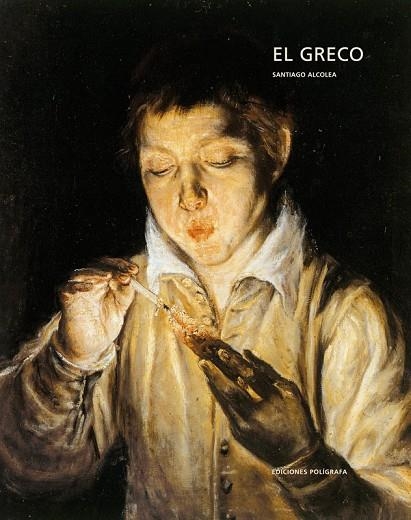
Doménicos Theotokópoulos, better known as El Greco (1541-1621), gained his training as an artist in Crete,Venice and Rome, the three centers of art that he passed through.Yet even though he learned from the great Italian artists of the 16th century, his arrogance was such that he went so far as to say that Michelangelo ?was a good man but he did not know how to paint?, remarking that the Last Judgment could be painted over and that he could be commissioned to re-do it ?with honesty and decency and no less quality in the painting?. His contemporaries found him a difficult personality. In 1577, he moved to Spain and made his home in Toledo. As an artist, he was capable of effective realism, but in his quest for ideal forms, he adopted a number of personal methods: elongated figures, thin faces, distorted foreshortening, dramatic rhythms and constant inventiveness in his use of color far beyond anything others of his day dared to do. El Greco was acclaimed in his own lifetime and was able to penetrate the mystical feeling of Spain under Philip II. In this lavishly illustrated volume, Professor Santiago Alcolea i Gil describes the most notable aspects of the life and work of this artist, one of the true masters in European pictorial art.
This website stores data as cookies to enable the necessary functionality of the site, including analytics and personalization. You can change your settings at any time or accept the default settings.
Necessary cookies help make a web page usable by activating basic functions such as page navigation and access to secure areas of the web page. The website cannot function properly without these cookies.
Personalization
Personalization cookies allow the website to remember information that changes the way the page behaves or the way it looks, such as your preferred language or the region in which you are located.
Analysis
Statistical cookies help web page owners understand how visitors interact with web pages by collecting and providing information anonymously.
Marketing
Marketing cookies are used to track visitors on web pages. The intention is to show ads relevant and attractive to the individual user, and therefore more valuable to publishers and third-party advertisers.