Hours: Monday to Friday from 9:30 to 20:30 / Saturday from 10 to 20.30 / Sunday and Holidays from 11:30 to 14:30 & 17:30 to 20:30 Pau Claris 144 Barcelona - 93.317.25.27 - correu@documenta-bcn.com
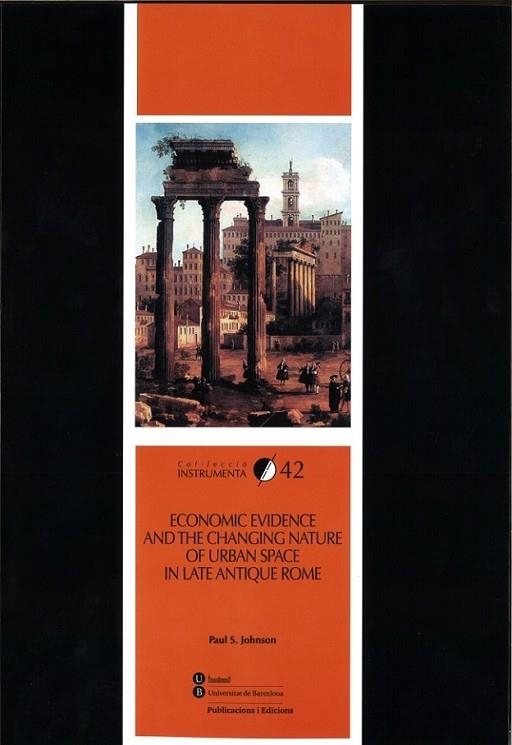
Economic Evidence and Changing Nature of Urban Space in Late Antique Rome by Paul Johnson, is an innovative study that focuses upon the relationship between the importation of amphora-borne foodstuffs, their distribution and discard within the City and what this tells us about changing uses of urban...
Economic Evidence and Changing Nature of Urban Space in Late Antique Rome by Paul Johnson, is an innovative study that focuses upon the relationship between the importation of amphora-borne foodstuffs, their distribution and discard within the City and what this tells us about changing uses of urban space between the 3rd and 6th centuries AD. There have been a number of archaeological studies of late antique Rome in recent years, most notably Roma dall02019;antichità all02019;alto Medievo I and II, as well as a long tradition of studies that have focused upon the pattern of imports to the City. However the relationship between imported foodstuffs and the City as an urban unit has not been so well served.
This website stores data as cookies to enable the necessary functionality of the site, including analytics and personalization. You can change your settings at any time or accept the default settings.
Necessary cookies help make a web page usable by activating basic functions such as page navigation and access to secure areas of the web page. The website cannot function properly without these cookies.
Personalization
Personalization cookies allow the website to remember information that changes the way the page behaves or the way it looks, such as your preferred language or the region in which you are located.
Analysis
Statistical cookies help web page owners understand how visitors interact with web pages by collecting and providing information anonymously.
Marketing
Marketing cookies are used to track visitors on web pages. The intention is to show ads relevant and attractive to the individual user, and therefore more valuable to publishers and third-party advertisers.